Compressed Air Moisture in Winter: What Jackson County, MO Facilities Should Check
Water in your air lines shows up as sputtering tools, sticking valves, rusty filter bowls, and pneumatic equipment that behaves differently from one week to the next. Once cold weather sets in, compressed air moisture can also freeze in lines that pass through unheated space and choke off air to entire areas of a plant.
For facilities across Jackson County, MO, late fall is the right time to find where moisture is coming from and where it's collecting, before the first hard freeze turns a nuisance into downtime.
Where Compressed Air Moisture Comes From
Every compressor pulls in ambient air, and that air carries water vapor. Compression concentrates the vapor, and as the air cools downstream of the compressor, it condenses into liquid water. The aftercooler, dryer, separators, and drains exist to remove that water before it reaches the distribution piping.
When any link in that chain is undersized, failing, or bypassed, water moves into the system. The Kansas City area's humid summers load intake air with moisture, so a system that struggled in July often shows the damage by fall: rust, scale, and sludge collected at low points and in filters.
Why Compressed Air Moisture Gets Worse in a Jackson County Winter
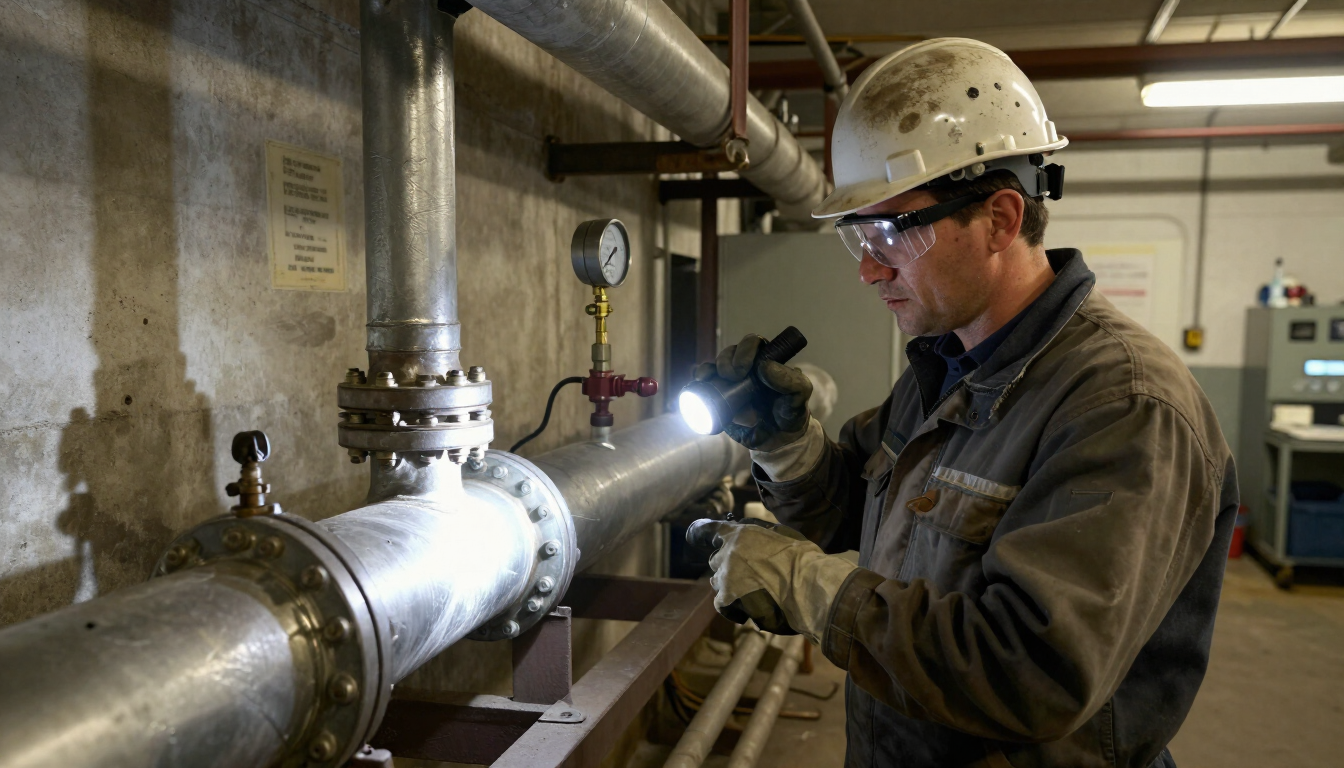
In summer, moisture is mostly an air quality problem. In winter, it becomes a flow problem. Water left in the piping settles at the lowest, coldest points, and if those points run through unheated space, it can freeze.
Common trouble spots include:
- Headers and drops along exterior walls or in uninsulated warehouse bays
- Lines serving dock doors, outbuildings, or rooftop equipment
- Drain valves and drip legs located outdoors or near overhead doors
- Dead-end branches where air sits still and water accumulates
Freeze-thaw cycling makes it worse. A line that ices up overnight and thaws by afternoon can loosen fittings and leave your team chasing intermittent pressure drops.
Warning Signs to Watch For
| Symptom | Likely cause | What it means for you |
|---|---|---|
| Water spitting from tools or blowoff nozzles | Dryer not keeping up, or water pooled in piping | Product quality and tool life are at risk |
| Rust, scale, or sludge in filter bowls | Ongoing moisture carryover into steel piping | Internal corrosion is already underway |
| Sluggish or frozen actuators in cold areas | Water freezing in the line or at the valve | The line could fully block in the next cold snap |
| Drains that never discharge, or run constantly | Failed or frozen drain, or excess water load | Water is backing up, or the system is wasting air |
| Low pressure at the far end of the system | Ice restriction, undersized piping, or leaks | Production slows and compressors work harder |
Key takeaway: If water keeps showing up downstream of a dryer that seems to be working, the piping layout is usually part of the problem, not just the equipment.
Is It a Piping Layout Problem or an Equipment Problem?
Piping layout issues
Distribution piping should be laid out so water has somewhere to go. Mains without proper slope, branch connections taken off the bottom of a header instead of the top, missing drip legs at low points, and runs routed through cold space all let water collect where it causes trouble. Plants that have expanded over the years often have air piping added in pieces, without anyone looking at the system as a whole.
Equipment issues
On the equipment side, the questions are whether the dryer is sized for current demand, whether the compressor matches how the plant uses air today, and whether drains and separators are working. A compressor that was right for the facility ten years ago may not be right after new lines and equipment have been added.
In practice, it's often both. That's why a useful review looks at the compressor room and the distribution piping together.
What a Qualified Compressed Air Review Should Cover
Compressed air lines store a lot of energy, and loosening a fitting, drain, or valve on a pressurized line can cause serious injury. Leave hands-on work to qualified technicians. Your team's role is to gather information and ask the right questions:
- Where does the piping pass through unheated or exterior space, and can those runs be rerouted or protected?
- Is the dryer sized for current peak demand, and is it performing?
- Where are the low points, and does each one have a working drain?
- Are branch connections taken from the top of the header?
- Does the compressor still match the facility's air demand, or has demand outgrown it?
- Can corrections be scheduled during a planned shutdown, such as a holiday week, to avoid disrupting production?
Note where problems show up, what time of day, and how outdoor temperature seems to affect them. Patterns like these help pinpoint the cause quickly.
How Anderson Mechanical Helps
Anderson Mechanical has completed compressor and air piping installations at facilities across the Kansas City area, from new compressor packages to modifications on existing air piping. Our compressor installation work starts with selecting the right size and specifications for your demand, and each component is aligned and calibrated to support your operations.
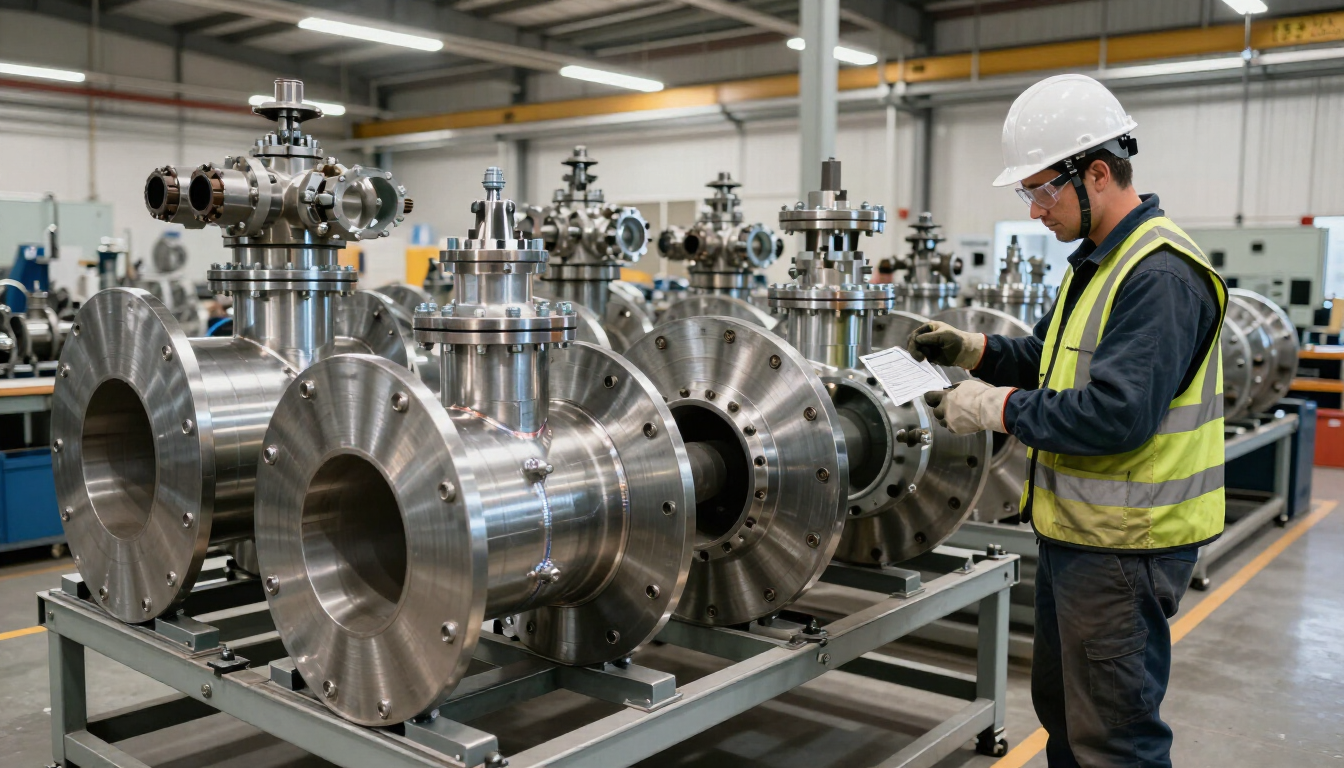
Where it makes sense, we prefab piping in our shop to shorten installation time on site and keep production interruptions brief. If you're weighing a new compressor, our guide to professional compressor installation for your facility covers what to plan for. And since the best time to correct a moisture problem is during planned downtime, see how scheduled mechanical service reduces downtime. We serve facilities in Jackson County, MO and across the Kansas City metro.
Fix Moisture Problems Before the Next Freeze
If air lines are freezing or tools are losing pressure right now, call (816) 307-7991. After-hours service is available 24/7. If you'd rather plan corrections around a shutdown window, request a quote for a compressed air piping walkthrough, and we'll help you sort out what's equipment, what's layout, and what to fix first.
Call (816) 307-7991 Request a Quote