Year-End Mechanical Capital Planning for Jackson County, MO Facilities
Next year's budget is getting finalized, and the boiler that needed three repairs this year, the chiller that struggled in August, and the pump that has been "on the list" for two seasons all need a decision. Mechanical capital planning done in Q4 lets you choose when and how that money gets spent. Skip it, and an equipment failure makes the choice for you.
This guide is for owners, operations directors, and anyone approving maintenance or capital spend. It covers why the end of the year is the right time to plan, how to sort equipment into clear budget categories, and what information you should expect from a mechanical assessment.
Why Q4 Is the Right Time for Mechanical Capital Planning
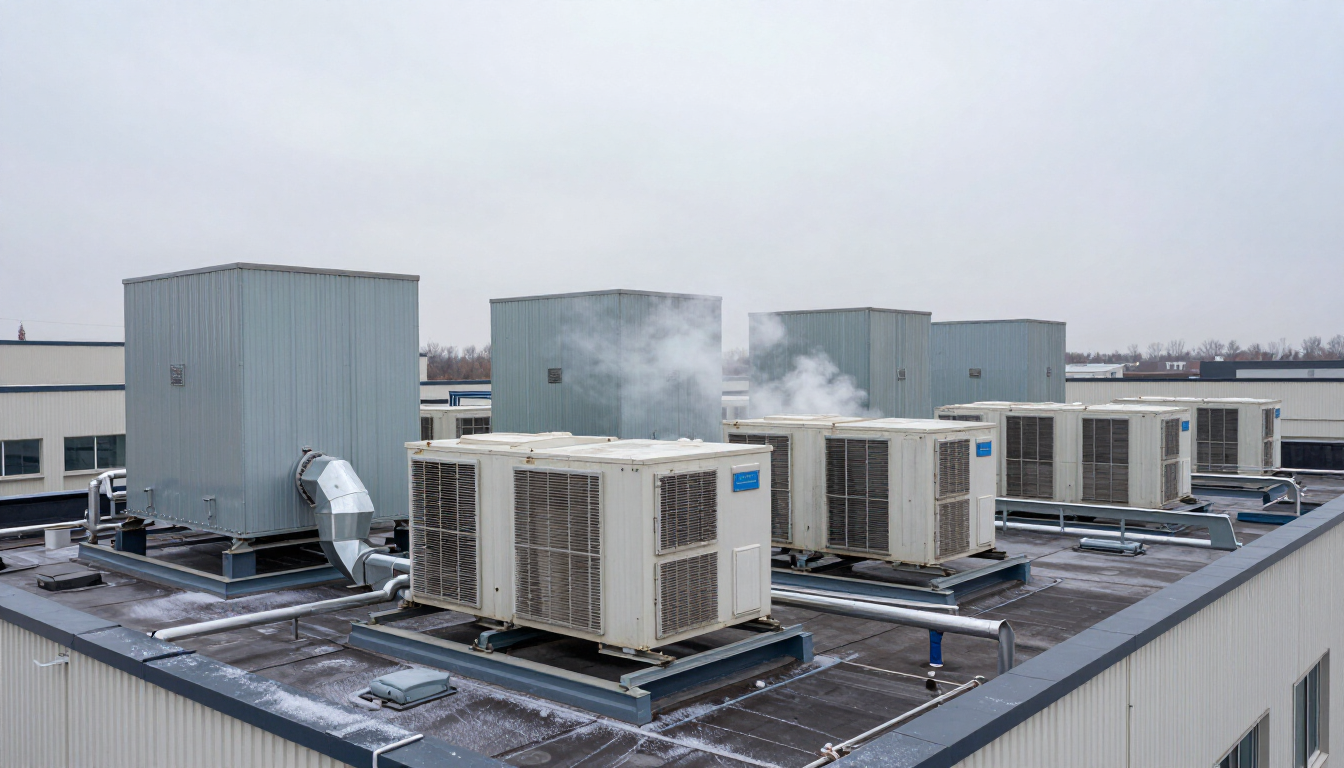
Timing matters for three reasons. First, your cooling season data is fresh. Your maintenance team knows which chillers, towers, and rooftop units struggled during the summer, and that knowledge fades by spring.
Second, the heating season is about to show you how your boilers are holding up. A fall assessment catches heating equipment problems before they turn into winter emergencies.
Third, major mechanical replacements take lead time. Equipment selection, approvals, manufacturing, and scheduling installation around operations all take longer than most budget cycles assume. A project approved in January has a much better chance of being installed during a low-impact window than one approved after a failure.
What Deferring Mechanical Work Actually Costs
Deferral looks free on a budget sheet. It isn't. The cost just moves to a line you can't control. Here is what typically changes when aging equipment runs until it fails:
- You lose control of timing. Failures happen during peak demand, which is exactly when your operation can least afford downtime.
- You pay for urgency. Emergency repairs, expedited parts, and after-hours labor cost more than the same work planned in advance.
- You narrow your options. In an emergency, you install what is available, not necessarily what is right for your load or efficiency goals.
- Damage spreads. A failed pump, a leak, or a boiler outage can affect production, product, inventory, and building systems beyond the failed equipment.
For a closer look at the operational side, see how mechanical system failures impact business operations.
Repair, Replace, or Monitor: A Simple Priority Framework
Not every aging piece of equipment needs replacement, and not every repair is worth making. Sorting your systems into three categories gives you a defensible budget and a clear conversation with your contractor.
| Category | Typical indicators | Budget move |
|---|---|---|
| Repair now | Safety controls failing or bypassed, active leaks, equipment that can't reliably meet current load | Fund immediately from maintenance or contingency. Don't defer to next cycle. |
| Plan replacement | Repeat repairs on the same unit, hard-to-source parts, rising energy use, capacity that no longer matches the building or process | Add to the capital plan with a target installation window and a budgetary quote. |
| Monitor | Stable performance, documented maintenance, minor wear with no pattern of failures | Keep on preventive maintenance and reassess at the next annual review. |
Key takeaway: the most expensive item on your list is usually not the oldest one. It's the one in the "plan replacement" category that keeps getting pushed back until it fails during peak demand.
If you're weighing a specific unit, our guide on when to upgrade your building's boiler or chiller system walks through the signs in more detail.
What a Useful Mechanical Assessment Should Give You
A walkthrough is only as good as what you can do with it. Before your budget meeting, ask your mechanical contractor for a written assessment that covers each major system: boilers, chillers, cooling towers, rooftop units, pumps, and process or distribution piping.
For each system, the assessment should include:
- Current condition and any active issues
- Repair history and recurring problems
- What happens to your operation if it fails
- A recommended category: repair now, plan replacement, or monitor
- A suggested timing window that fits your operation
- Budgetary pricing for any repair or replacement recommendation
That format gives you a ranked list you can take straight into a capital review, instead of a stack of service tickets.
Phasing Work to Protect Operations
Planned work can be scheduled around your business. Cooling equipment is easiest to replace in late fall and winter, when the load is lowest. Heating equipment is easiest to replace in late spring and summer. Pairing each project with its off-season reduces risk and keeps the building running.
Larger projects can be split into phases so that only part of a system is offline at a time. Anderson Mechanical is equipped to plan, manage, and build multi-phase projects, and we preassemble piping in our shop to shorten installation time on site. Those two things together are often what make a replacement possible without shutting down production. Learn more about our boiler and chiller installation work.
A Long-Term Mechanical Partner in Jackson County, MO
We have served commercial and industrial facilities across Kansas City and the surrounding area for more than 20 years, and Jackson County, MO is part of our core service area. From preventive maintenance to full equipment replacement, you can see the full range of our mechanical maintenance, repair, and installation services.
Schedule a Walkthrough Before Your Budget Is Final
Request a facility walkthrough and we'll help you sort your mechanical systems into repair, replace, and monitor categories, with budgetary pricing you can take into your capital review. If something is failing right now, call (816) 307-7991. After-hours service is available 24/7.
Request a Facility Walkthrough Call (816) 307-7991