Commercial Rooftop Unit Replacement in Kansas City, MO
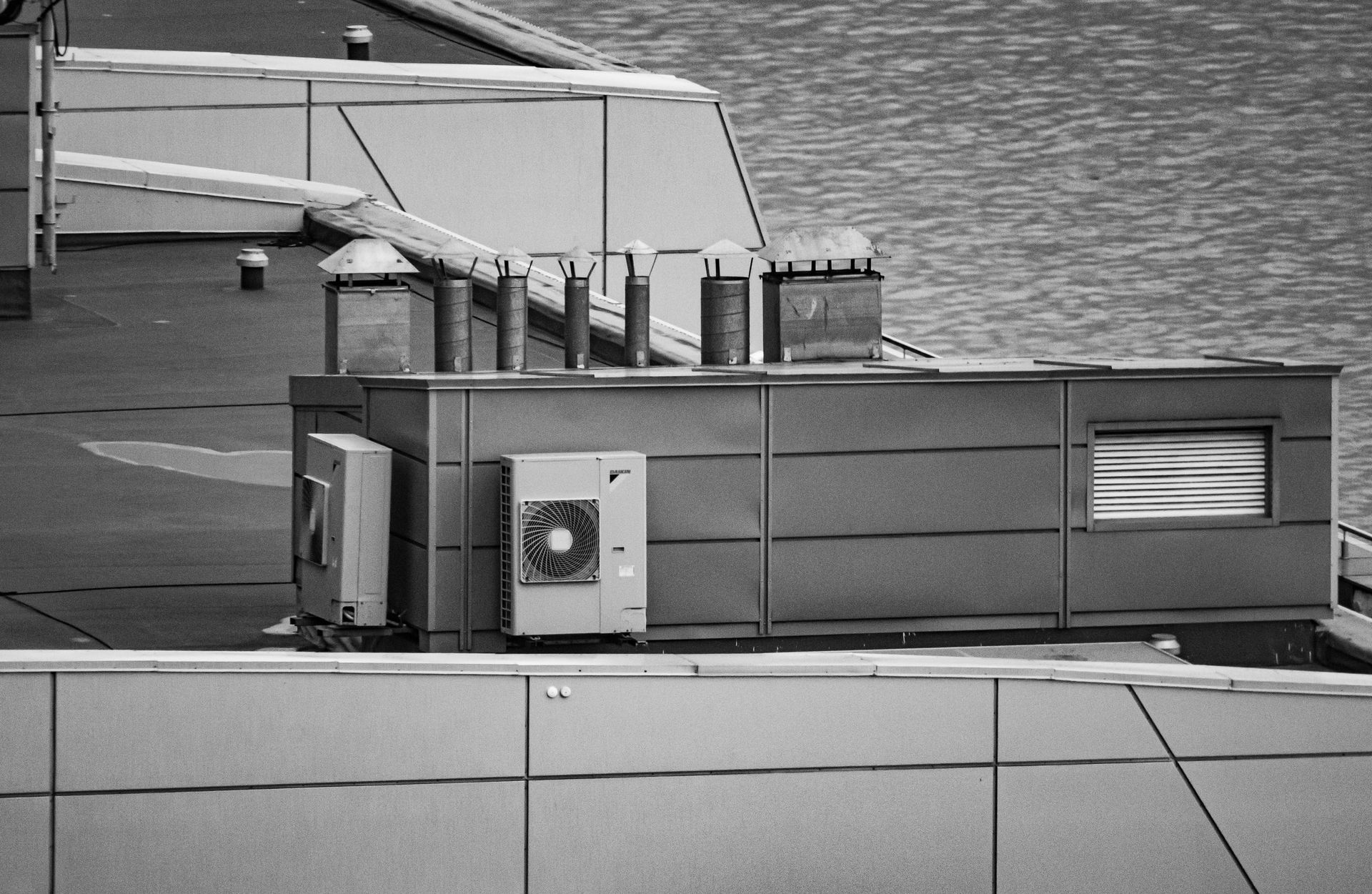
Rooftop units are the easiest equipment in your portfolio to ignore, because nobody sees them and they mostly keep working. Then one fails in the last hot stretch of the summer, and a commercial rooftop unit replacement gets decided in an afternoon by whoever answers the phone.
Owners and operations directors across Kansas City, MO end up making these calls reactively far more often than they should. The signals are usually available months ahead. They just do not arrive as alarms.
Why Rooftop Units Age Faster Than You Think
A packaged rooftop unit lives outside, exposed, with no shelter from anything. In this climate that means a full freeze-thaw cycle every winter, high humidity load in summer, hail, wind-driven rain, and long stretches of direct sun on painted sheet metal.
Cabinet corrosion, gasket deterioration, coil degradation, and control component aging all run faster on a roof than the same components would in a mechanical room. Two units of identical age can be in very different condition depending on roof exposure and how consistently they were maintained.
The practical consequence is that unit age alone is a weak predictor. Age combined with documented condition and repair history is a strong one.
The Signals That Carry Real Weight
Not every symptom means the same thing. Here is how to weight what you are seeing.
| Signal | What it indicates | Weight in the decision |
|---|---|---|
| Repeated service calls across different subsystems | The unit is at end of life, not suffering one bad component | High |
| Compressor or heat exchanger failure | A core component, not a wear item | High |
| Refrigerant being phased down, or parts hard to source | Future service will get costlier and slower | High |
| Cabinet rust-through, base pan corrosion, failed gaskets | Water is entering the unit and the roof assembly | High |
| Can no longer hold setpoint on design days | Capacity loss from fouling, charge, airflow, or wear | Medium, diagnose first |
| Rising energy use with no occupancy change | Efficiency degradation, often correctable | Medium, diagnose first |
| Tenant or occupant comfort complaints | Could be the unit, distribution, controls, or zoning | Low on its own |
| Noise or vibration that is new | Bearing, fan, or mounting issue | Low on its own, but investigate promptly |
Anything in the medium or low rows deserves diagnosis before it deserves capital. Some of the most expensive replacements we see approved were units that needed coil cleaning, an economizer repair, or a controls correction.
Where Deferral Actually Costs You
Deferring is a legitimate decision, but it should be priced rather than defaulted to. The costs land in four places.
- Emergency service at premium rates, repeatedly, at the worst time of year for availability.
- Energy paid on degraded equipment, every operating hour, with nothing to show for it.
- Roof and interior damage from a unit that has lost its weather integrity. This is the cost owners underestimate most, because the repair bill shows up under a different budget line.
- Business impact when the space cannot be conditioned, whether that means tenant relations, occupant comfort, product, or production. Our look at the true cost of ignoring HVAC maintenance covers how those add up.
What a Replacement Scope Actually Includes
Owners who have only ever seen equipment pricing are frequently surprised by a replacement scope, because the unit is not the whole job. A complete scope addresses:
- Rigging and access. Crane placement, roof access, protection of the roof assembly, and the logistics of getting the old unit down and the new one up. On tight urban sites this can shape the whole plan.
- Curb condition and adaptation. Existing curbs rarely match new equipment footprints exactly. Curb adapters, flashing, and roofing coordination belong in the scope.
- Ductwork transitions. Supply and return connections at the curb, and any modifications the new unit requires.
- Gas piping and electrical. Verified capacity and connections for the new unit, not assumed from the old one.
- Controls integration. How the new unit reports to and is controlled by whatever system you already run.
- Startup, commissioning, and documented turnover. Verified performance rather than a unit that runs.
Installation quality determines whether you actually get the efficiency you paid for, which is the point of how equipment installation affects long-term energy efficiency. A high-efficiency unit set on a poorly adapted curb with leaking transitions performs like a cheaper unit.
Replace One, or Plan the Whole Roof
If you have a roof full of units purchased around the same time, you have a portfolio decision rather than an equipment decision.
Replacing them one failure at a time means paying mobilization and rigging costs repeatedly, absorbing an emergency every year or two, and ending up with a roof of mismatched equipment and control strategies. Sequencing replacements deliberately over two or three budget cycles, worst-condition first, lets you consolidate rigging, standardize equipment, and stop reacting.
That plan starts with a documented condition assessment of every unit, ranked. Until you have that, you are guessing about which one fails next.
Get Your Roof Assessed Before the Next Failure Chooses for You
Anderson Mechanical has delivered mechanical contracting across Kansas City, MO for more than 20 years, handling both rooftop unit installation, maintenance, and repair. Because we do both, we have no reason to steer you toward the more expensive answer.
If a unit is down right now and a space cannot be conditioned, call (816) 307-7991. After-hours service is available 24/7.
If you are building next year's capital plan, request a rooftop equipment condition assessment. You will get a ranked list of your units, a straight repair-or-replace recommendation for each, and replacement scopes defined well enough to budget against. For further reading on the decision itself, see when to replace vs. repair commercial HVAC equipment and how to choose the right rooftop HVAC unit.