Commercial VRF Installation in Johnson County, KS
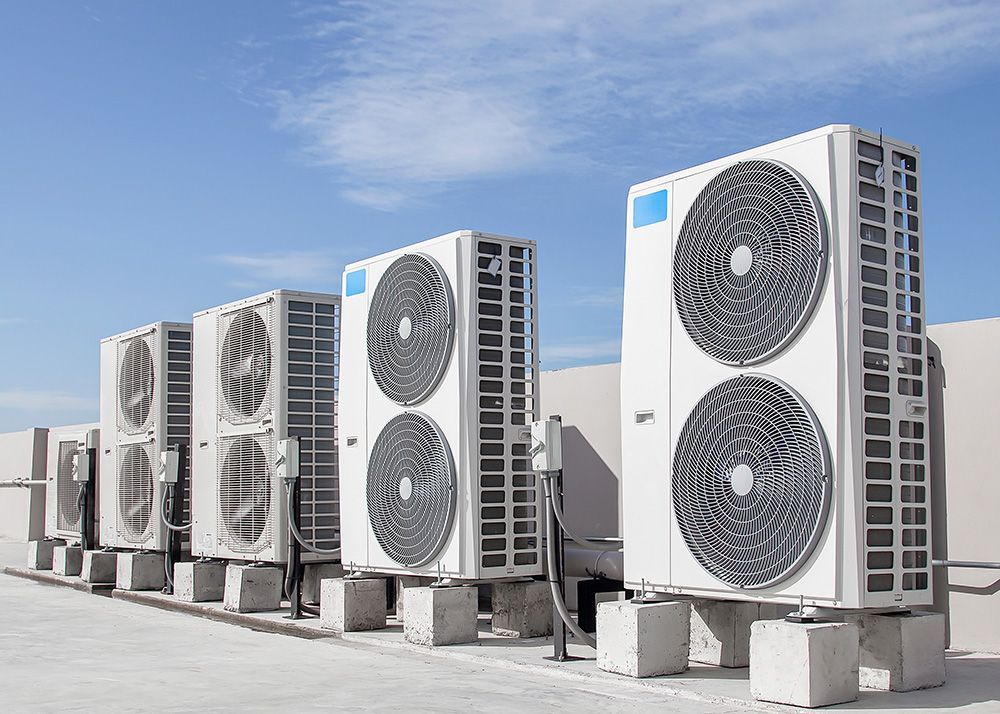
A commercial VRF installation looks straightforward on a mechanical schedule. Outdoor units, branch controllers, indoor units, line sets. Then the refrigerant piping route crosses three other trades, the branch controller lands above hard ceiling with no access, and startup gets held because a manufacturer requirement was not scheduled.
If you are managing a build in Johnson County, KS with variable refrigerant flow in the scope, the coordination decisions you make in the first month determine whether the mechanical trade finishes with you or after you.
Refrigerant Piping Is the Whole Job
Treat VRF as a piping project with equipment attached rather than an equipment project with some piping. The refrigerant distribution network is longer, more branched, and less forgiving than the ductwork it replaces.
What that means for your schedule and your drawings:
- Total line length and elevation differences are limited by the manufacturer. These are design constraints, not field preferences. A routing change made in the field to dodge a conflict can push a circuit out of allowable limits.
- Every branch point is engineered. Branch and header placement follows the system design, so relocating one is a design revision, not a field adjustment.
- Insulation is continuous and non-optional. Both lines, full length, no gaps at supports or penetrations. Gaps produce condensation, and condensation above a finished ceiling produces a callback with a drywall repair attached.
- Joining, testing, and evacuation follow manufacturer requirements exactly. These steps are specialized, they are verified before charging, and they are the reason startup gets delayed when they are rushed. This is qualified crew work with specific equipment.
- Line set routing competes for the same space as everything else. Above ceiling, you are sharing a plenum with duct, sprinkler, conduit, cable tray, and structure.
The most common schedule failure on VRF is a routing conflict discovered after adjacent trades have installed, because the fix is either a design revision or somebody else's demolition.
Coordinate the Route Before Anyone Installs Above Ceiling
Get the refrigerant routing into the coordination model or the overhead coordination drawings at the same time as duct and sprinkler, not after. VRF line sets are small enough that they get treated as flexible and routed last, which is exactly backward given the length and elevation constraints they carry.
Resolve these before overhead work starts:
- Primary and branch routing, with actual measured lengths. Confirm the installed route still satisfies the design limits.
- Branch controller and distribution box locations, with permanent service access. These are serviceable components. If one lands above inaccessible ceiling, you have created a maintenance problem that outlives the project.
- Penetrations and structural coordination. Roof, wall, and floor penetrations plus support attachment points, agreed with structural.
- Condensate routing from every indoor unit. Slope, termination, and conflicts. This is a frequent late-stage surprise.
- Electrical and low-voltage control pathways. Power to outdoor units and controllers, plus the control wiring topology the manufacturer requires, which is not a trade decision.
Submittals and Long Leads Drive Your Real Start
VRF equipment packages carry lead times, and the submittal package is larger than a comparable split or rooftop system because the piping design, controls topology, and equipment selection are interdependent.
Lock down early:
- Full equipment and piping submittal issued, with an agreed approval turnaround in writing
- Long-lead equipment released with confirmed delivery dates
- Controls scope boundary defined, specifically whether VRF controls integrate with a building management system and who owns that integration
- Manufacturer startup and commissioning requirements identified, including who must be present and how far in advance it must be scheduled
- Inspection sequence agreed with the authority having jurisdiction, since it determines when piping can be concealed and insulated
- Warranty conditions understood, because several are tied to installation and startup being performed and documented a specific way
Verify the inspection path early. Jurisdictions across the metro handle scheduling and required inspections differently, and an inspection hold on concealed piping strands the ceiling contractor.
Sequencing VRF Against the Rest of the Build
VRF work is front-loaded and back-loaded with a quiet middle, which makes it easy to under-resource at both ends.
A sequence that generally holds:
- Coordination and submittals complete before overhead installation begins.
- Rough-in: supports, primary and branch routing, sleeves and penetrations, branch controllers set, condensate rough.
- Piping completion and verification before ceiling close-in, with inspection scheduled to match.
- Insulation complete and inspected before anything is concealed. Chasing an insulation gap later is expensive.
- Indoor unit set and trim coordinated with ceiling and finish trades.
- Startup, commissioning, controls verification, and owner training as a defined phase with its own duration, not as an afterthought on the punch list.
That final phase is where VRF projects most often slip. Commissioning a multi-zone system involves verifying every circuit and every zone, and it cannot be compressed into a single afternoon because the certificate of occupancy date moved.
What to Ask a Mechanical Sub Before Award
VRF rewards installers who have done it before and punishes those who have not, because most of the failure modes are invisible until startup. Ask:
- Which VRF platforms have your crews installed, and who performs the startup?
- How do you verify installed line lengths and elevations against the design limits?
- Can you prefabricate any of this scope to reduce field hours?
- Who owns controls integration, and where does your scope end?
- What do you need from me, and by when, to protect the schedule?
We install and maintain Mitsubishi VRF systems, Daikin VRV systems, and LG VRF systems, and we prefabricate piping in our own shop where the layout allows it, which moves hours off your critical path. Our VRF installation page covers how we scope the work. If the system selection itself is still open, whether VRF is right for a commercial building is the better starting point.
Bring Us in During Coordination, Not at Rough-In
Anderson Mechanical has delivered mechanical contracting across Johnson County, KS and the Kansas City metro for more than 20 years, including multi-phase work inside occupied buildings. Our crews hold OSHA certification along with formal trade school training.
If you have a VRF scope in preconstruction or coordination, send us the drawings and request a scope review and preliminary schedule. Call (816) 307-7991 or submit your project details, and we will flag routing and access conflicts, identify long leads, and give you a sequence with commissioning built in rather than bolted on.
For the wider planning picture, see how to plan a commercial HVAC installation project.