Sanitary Food Process Piping in Lee's Summit, MO
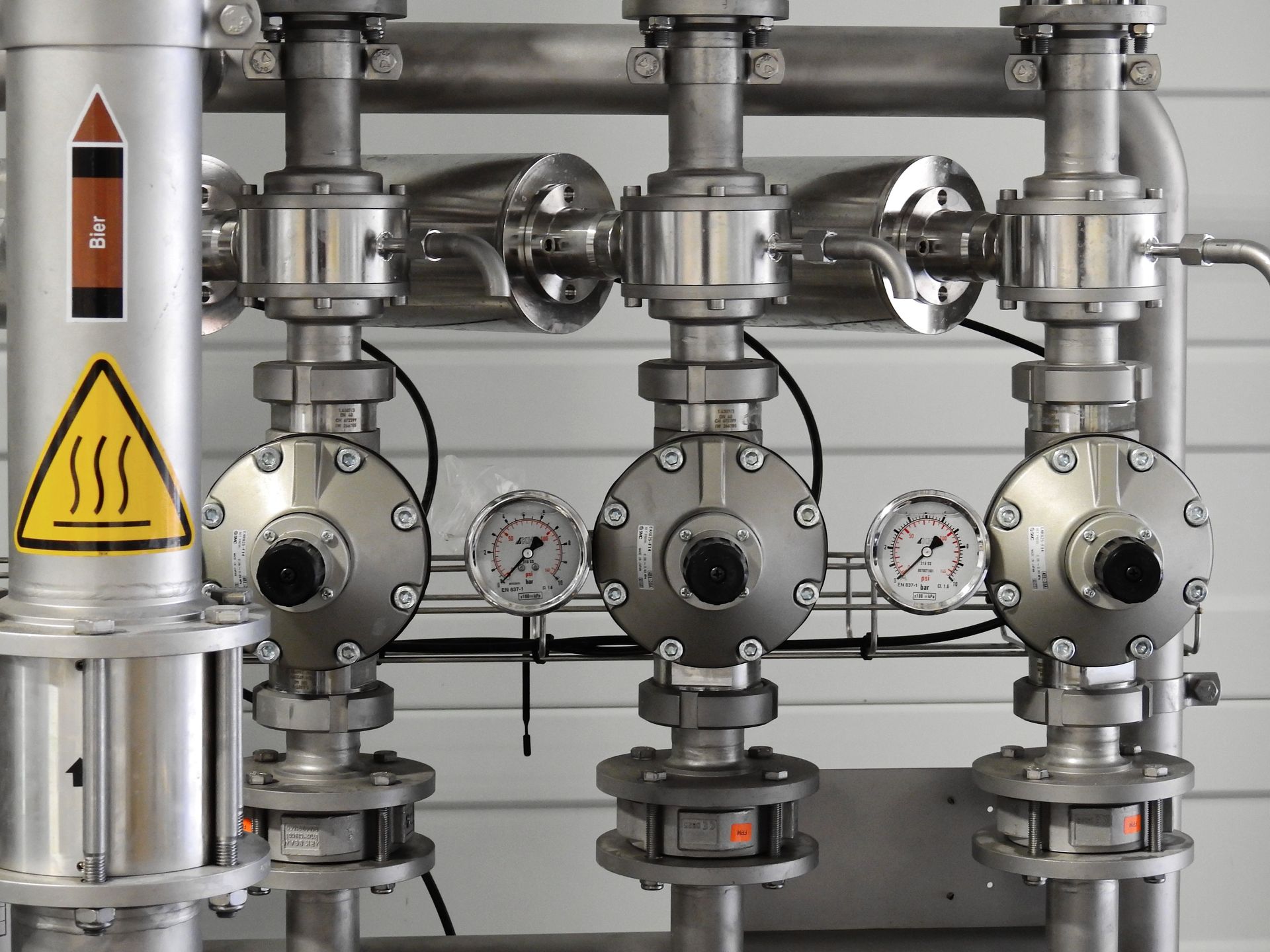
When a sanitation swab comes back positive on a line that passes every visual check, the problem is often not your sanitation program. It is the piping the program has to clean.
Sanitary food process piping either supports your cleaning cycle or quietly works against it, and the difference traces back to weld quality, slope, and layout decisions made during installation. If you run a food or beverage operation in Lee's Summit, MO, those decisions are worth understanding before your next line addition or repair.
Why Hygienic Piping Is a Different Discipline
Industrial piping is judged on whether it contains pressure and moves product reliably. Sanitary piping has to do that and be reliably cleanable in place, on a schedule, without disassembly.
Cleanability is a physical property of the installed system, not a procedure applied to it. Surface finish, joint quality, slope, and layout determine whether cleaning solution actually reaches and scours every wetted surface. A single rough weld or unsloped run creates a spot your cleaning cycle cannot reach, and no amount of chemistry or contact time fixes geometry.
If you have a recurring sanitation finding on one specific line or section, treat the piping itself as a suspect rather than assuming the program failed.
Dead Legs, Drainability, and Why Layout Is a Sanitation Issue
Three layout problems account for a large share of the sanitation issues we get called into.
Dead legs
A dead leg is a branch, stub, or run where product or cleaning solution sits without meaningful flow. Abandoned tie-in points, capped stubs left from a removed piece of equipment, and instrument connections that are longer than they need to be all qualify. Flow does not scour them, so they become reservoirs.
Dead legs accumulate over years of incremental changes. Nobody installs one deliberately. They appear when a line is modified and the old branch is capped instead of removed.
Drainability
Sanitary lines are designed to drain completely, which means continuous slope to a low point with no unintended sags between supports. Residual liquid sitting in a low spot after a cleaning cycle undermines the whole cycle. Support spacing and hanger condition matter here as much as the original design, because a sagging run creates a low point that was never on a drawing.
Joint and fitting selection
Every joint is either cleanable or it is a place for residue to sit. Threaded connections, standard industrial fittings, and rough or misaligned welds all create crevices. Where a line needs to be disassembled for cleaning or changeover, sanitary clamp connections belong there. Where it does not, a properly executed weld is the better answer because it eliminates the joint entirely.
Where Weld Quality Actually Shows Up
Weld quality is the least visible variable and the one with the longest tail. A weld with excessive penetration, misalignment at the joint, discoloration from inadequate purge, or crevices at the root creates a surface irregularity on the product-contact side that nobody sees during a walkthrough.
What you experience instead is a line that needs longer cleaning cycles to pass, a recurring finding in one location, or corrosion appearing at joints years earlier than elsewhere in the system. By the time it is identified, replacing that section means taking a line out of production.
This is why sanitary welding is a specialty rather than general pipe fitting, and why the qualification of the crew doing it matters more than almost anything else in the scope. It is also why we prefabricate what we can in our shop, where joint conditions are controlled, rather than making every weld in a plant aisle. We handle stainless steel fabrication for exactly this kind of work.
Modifications Are Where Good Systems Go Wrong
Most sanitary systems are not installed badly. They are modified badly, incrementally, over a decade of line changes made under time pressure.
The pattern is consistent:
- A branch is added quickly during a short window, with slope compromised to clear an obstruction
- Equipment is removed and its connection capped in place rather than cut back to the main
- A repair uses whatever fitting was on hand rather than the correct sanitary connection
- Supports are relocated to make room for something else and never restored to correct spacing
- Nobody updates documentation, so the next crew inherits guesses
Every one of those is defensible in the moment. Collectively they turn a cleanable system into one that needs a longer cycle and still produces findings.
What to Require From Your Piping Contractor
Whether you are planning a line addition or correcting an existing problem, hold the scope to these:
- Documented material specification. Alloy, finish, and fitting type stated, not assumed.
- Weld documentation and inspection. Which joints, inspected how, recorded where. You want a record, not reassurance.
- Slope and drainability verified as installed, not just designed. Support spacing confirmed against the final layout.
- Dead leg elimination. If the scope touches a section, abandoned branches in that section get cut back rather than capped.
- A cleaning cycle that was considered during design. Cleanability should be a design input, not something verified after startup.
- Turnover documentation you can hand to the next contractor, including as-built routing and material records.
- A plan for working in an operating plant, covering containment, segregation from production areas, sequencing around your run schedule, and how the area is returned to sanitary condition.
That last point separates contractors who work in food plants from contractors who work in industrial buildings. Hot work, fabrication debris, and open lines in a production environment require a different approach, which is why we handle multi-phase work inside occupied, operating facilities as a defined capability rather than an accommodation.
Get the Piping Looked At Before the Next Finding
Anderson Mechanical has provided industrial and mechanical piping across Lee's Summit, MO and the Kansas City metro for more than 20 years, including new construction, repairs, and restorations in sanitary food process piping along with the pumps and equipment installation that moves product through it. Our technicians hold OSHA certification along with formal trade school training.
If a line is down or you have a leak or failure affecting production, call (816) 307-7991. After-hours service is available 24/7.
If you have a recurring sanitation finding, a planned line addition, or a system that has accumulated a decade of modifications, request a sanitary piping assessment. We will walk the system, identify dead legs and drainage problems, flag joints and sections worth correcting, and give you a scope you can sequence around your production schedule.
Further reading: why proper sanitary piping installation matters, how sanitary food-grade piping supports compliance and safety, and what to look for in a mechanical partner who understands sanitary design.