Compressed Air Moisture Problems in Jackson County, MO
Compressed air system moisture problems are a summer story in this part of the country. A system that ran clean in March starts blowing water at the point of use in July, and nothing about the compressor itself has changed.
If you run a plant in Jackson County, MO, the humidity is the variable. Understanding why tells you whether you have a maintenance issue, a capacity issue, or a system design issue — and those three have very different price tags.
Where the Water Comes From
Ambient air carries water vapor, and hot humid air carries a lot of it. Your compressor takes in that air and reduces its volume dramatically. The water vapor does not disappear; it gets concentrated into a much smaller space, and as the compressed air cools downstream, that vapor condenses into liquid.
The higher the intake humidity, the more liquid water your system has to remove per hour of runtime. On a humid Missouri afternoon, a system can be asked to handle several times the condensate load it handled on a dry spring morning at the same output.
Your dryer, separators, drains, and filtration were sized around an assumed condensate load. Summer is when a system that was marginal gets exposed, not when it breaks.
Symptoms That Point at Moisture
- Water at point-of-use tools, actuators, or filters. The most obvious symptom and usually the last one to appear.
- Rust or scale flakes in air lines and filter bowls. Internal corrosion in steel piping, which means the water has been present for a while.
- Erratic pneumatic actuator or valve behavior. Liquid in a control line does not behave like air.
- Dryer running continuously or alarming. Either it is undersized for current conditions or it is not performing to spec.
- Automatic drains that never seem to cycle, or that blow continuously. Both indicate the condensate management side has stopped working correctly.
- Rising filter differential pressure between service intervals. Wet air loads filtration faster.
- Product quality issues in coated, printed, painted, or packaged goods. Air quality problems often show up in the product before they show up in the maintenance log.
Why This Matters More in Some Facilities Than Others
The Kansas City metro's industrial base runs heavily toward manufacturing, food processing, warehousing, and healthcare. Compressed air tolerance varies enormously across those.
A warehouse using air for occasional tooling can absorb a wet system for a while. A food or beverage plant where air contacts product or product-contact surfaces cannot — the air quality requirement there is part of the process, not a convenience. The same is true for pharmaceutical, coating, and precision assembly operations where a slug of water is a batch loss.
If your plant falls into that second group, moisture is a process control problem and belongs on the same priority list as the sanitary food process piping that carries your product.
Maintenance-Side Causes Worth Ruling Out First
Before anyone proposes new equipment, confirm the existing system is actually being maintained. In our experience, a meaningful share of summer moisture complaints resolve here.
- Failed or bypassed automatic drains. Manual drains that no one opens are functionally the same as no drains at all.
- Aftercooler fouling. If the aftercooler cannot reject heat, moisture that should condense and separate at the compressor moves downstream into your piping instead.
- Overdue filter elements. Loaded coalescing filters stop coalescing.
- Dryer not receiving proper service. Refrigerated and desiccant dryers each have specific service needs, and both fail quietly.
- Compressor room ventilation. A hot compressor room raises intake temperature and worsens everything downstream. Blocked louvers and dead exhaust fans are common and cheap to fix.
Diagnosing and correcting any of this involves live compressed air, stored energy in receivers, and hot surfaces. It is not a walk-around task — a compressed air line does not need to be large to cause a serious injury when it lets go.
When the Fix Is the System, Not the Compressor
If maintenance is current and you still have water at the point of use, the problem is usually one of three things:
- Drying capacity that never matched local summer conditions. A dryer specified against mild ambient assumptions will underperform every July.
- Distribution piping that works against you. Undersized mains, long horizontal runs without proper slope or drainage, takeoffs from the bottom of a header, dead legs, and missing drip legs all collect and then deliver water. Old plants accumulate this over decades of ad hoc additions.
- Demand that outgrew the system. Added production, added tooling, added leaks. Systems get quietly loaded past their design point.
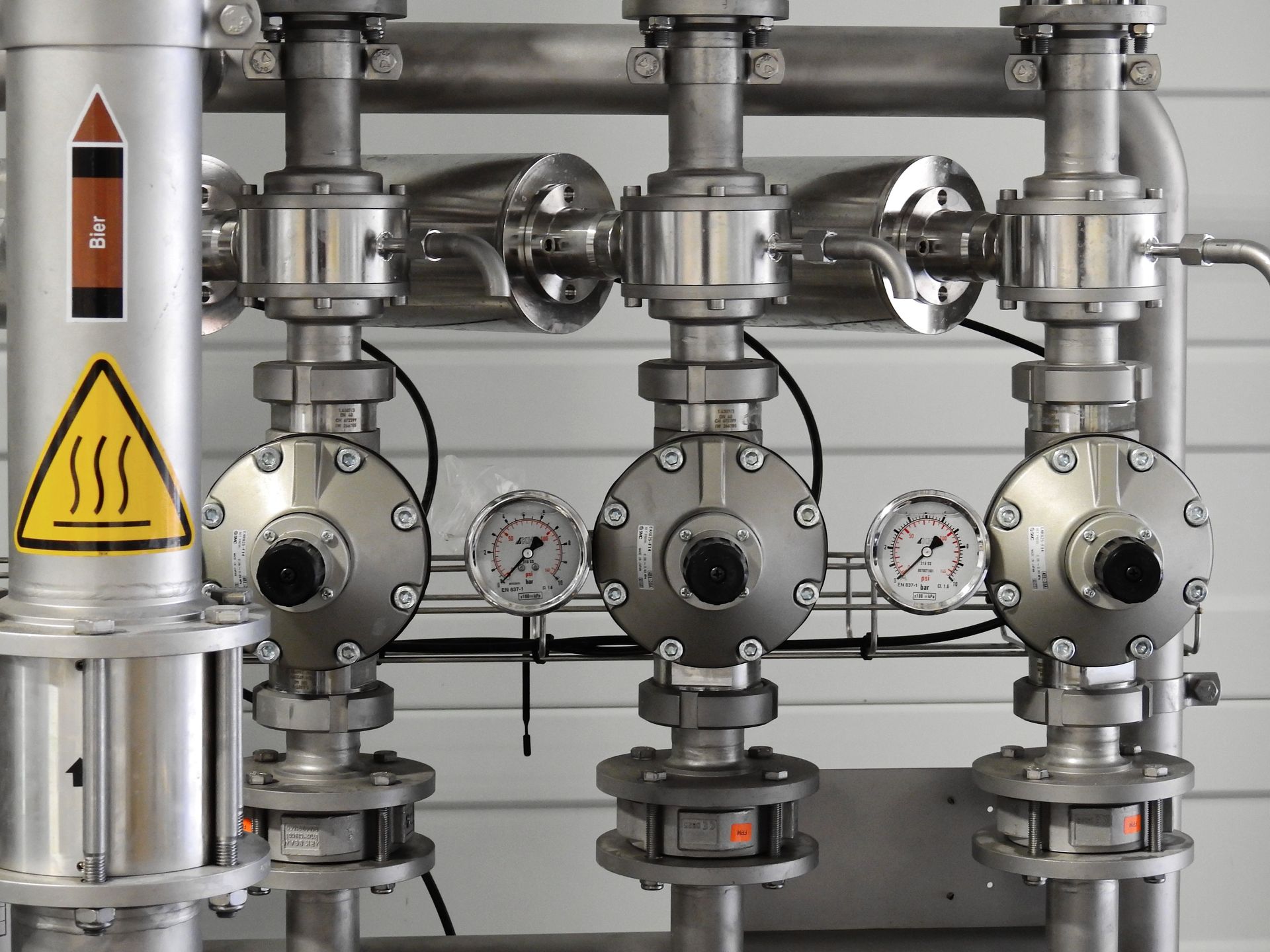
This is where a piping and equipment scope beats another service call. Correcting header sizing, adding proper drip legs and drains, relocating takeoffs, adding or upsizing drying and filtration, and cleaning up the distribution layout addresses the cause rather than chasing symptoms every summer.
Our professional compressor installation work covers equipment selection through piping, alignment, and integration with existing systems, and we prefabricate piping in our shop where the layout allows it — which shortens the time your plant has crews and open lines in the way. If you are early in that conversation, what to know about compressor installation for your facility covers what a proper scope includes.
Get the Moisture Problem Diagnosed Before Peak Season Ends
Anderson Mechanical has worked on industrial and mechanical piping across Jackson County, MO and the greater Kansas City area for more than 20 years. Compressed air, process piping, and the equipment on both ends of it are core work for us — see our full range of mechanical services.
If water is reaching production right now and affecting output, call (816) 307-7991. After-hours service is available 24/7.
If it is a recurring seasonal annoyance you are finally ready to solve, request a compressed air system assessment while the humidity is high and the problem is visible. Summer is the best time to see what your system actually does under load — and our overview of how mechanical system failures affect operations explains why the seasonal annoyance is usually costing more than it looks like.